Solar for Factories: How to Reduce Industrial Energy Costs
Introduction
Factories in Nigeria face massive power challenges:
❌ High diesel costs
❌ Unstable electricity
❌ Frequent generator breakdowns
❌ Costly machine downtime
❌ Reduced production efficiency
Energy cost is often the second-highest expense in Nigerian manufacturing — sometimes even higher than staff wages.
This is why forward-thinking factories are now switching to commercial-grade solar power.
In this guide, Solarzone Nigeria explains how solar drastically reduces industrial energy costs and improves reliability for factories.
⭐ 1️⃣ Diesel Costs Are Destroying Factory Profits
Factories rely heavily on diesel generators, which consume fuel at an alarming rate.
Average diesel use:
-
Medium factory: 500–2,500 litres/week
-
Large factory: 3,000–10,000 litres/week
At today’s diesel prices, this equals:
➡ ₦500,000 – ₦7 million monthly
➡ ₦6 million – ₦80 million yearly
Solar reduces this cost by 30–70%, depending on the system size.
⭐ 2️⃣ Solar Provides Stable Power for Production Lines
Factory operations need steady, uninterrupted power for:
✔ Motors
✔ Compressors
✔ Packaging machines
✔ Conveyor belts
✔ Cold rooms
✔ Industrial ovens
✔ Office blocks
✔ ICT & surveillance
Solar power is clean, stable, and voltage-protected, which improves machine lifespan and reduces downtime.
⭐ 3️⃣ Hybrid Solar Systems Reduce Generator Runtime
Hybrid industrial solar systems intelligently combine:
✔ Solar
✔ Battery bank
✔ PHCN
✔ Generator
The system automatically prioritizes solar + batteries, reducing generator usage by 60–90%.
Benefits:
-
Lower fuel consumption
-
Lower generator maintenance
-
Longer generator lifespan
-
Higher operational efficiency
Factories no longer need to run generators during the day.
⭐ 4️⃣ Solar Reduces PHCN Bills & Tariff Losses
Factories pay commercial PHCN tariffs, which are higher than residential rates.
Solar reduces PHCN reliance by:
✔ powering daytime operations
✔ supporting small nighttime loads
✔ reducing peak-hour PHCN usage
This keeps monthly NEPA bills low.
⭐ 5️⃣ Solar Protects Industrial Machines From Power Damage
PHCN fluctuations and generator instability cause:
❌ Burnt motors
❌ Faulty control boards
❌ Damaged sensors
❌ Compressor failure
Solar power is steady, preventing machine damage and reducing repair costs.
⭐ 6️⃣ Lithium Battery Storage Ensures Night-Time Production
Factories that run late-hours need strong battery storage.
Lithium batteries offer:
✔ 8–12 years lifespan
✔ Fast charging
✔ Strong discharge capacity
✔ Support for heavy machinery
Factories use them to power:
-
Lighting
-
Office areas
-
Servers
-
Security systems
-
Basic machine controls
This eliminates night-time generator dependence for light-to-medium loads.
⭐ 7️⃣ Scalable Solar Systems for Factories
Solarzone designs commercial systems from:
-
20kW to 500kW
-
Up to 1MW (industrial plants)
These systems are scalable — meaning they grow as your factory expands.
⭐ 8️⃣ Solar Reduces Equipment Maintenance & Downtime
Because solar provides clean and stable electricity:
✔ Machines fail less
✔ Less overheating
✔ Less electrical repair cost
✔ Minimal vibration & noise
✔ Better equipment uptime
This improves production speed and reliability.
⭐ 9️⃣ Solar Makes Factory Operations Predictable
Factories experience losses from:
❌ sudden blackouts
❌ machine restart delays
❌ half-cooked or wasted materials
❌ interrupted packaging
With solar:
✔ Production is steady
✔ Workflows are smooth
✔ No unexpected power interruptions
Factories become more efficient and competitive.
⭐ 🔟 Solar Energy Improves Factory Profit Margin
By reducing:
✔ diesel cost
✔ PHCN cost
✔ generator repairs
✔ machine breakdown
✔ downtime
Solar significantly boosts factory profit margins.
Most factories recover their solar investment in 2–4 years — then enjoy free power afterward.
⭐ 11️⃣ Best Factory Solar Components (Recommended by Solarzone)
✔ Solar Panels (Monocrystalline 550W)
High efficiency & large surface area.
✔ Hybrid Inverters (20kVA – 100kVA)
Industrial-grade pure sine wave.
✔ Lithium Batteries (48V 200Ah–500Ah)
Fast charging, long lifespan.
✔ MPPT Charge Controllers (100A–250A)
Maximum outputs for large solar arrays.
✔ Industrial Wiring & Protection
Surge protection, breakers, isolation panels.
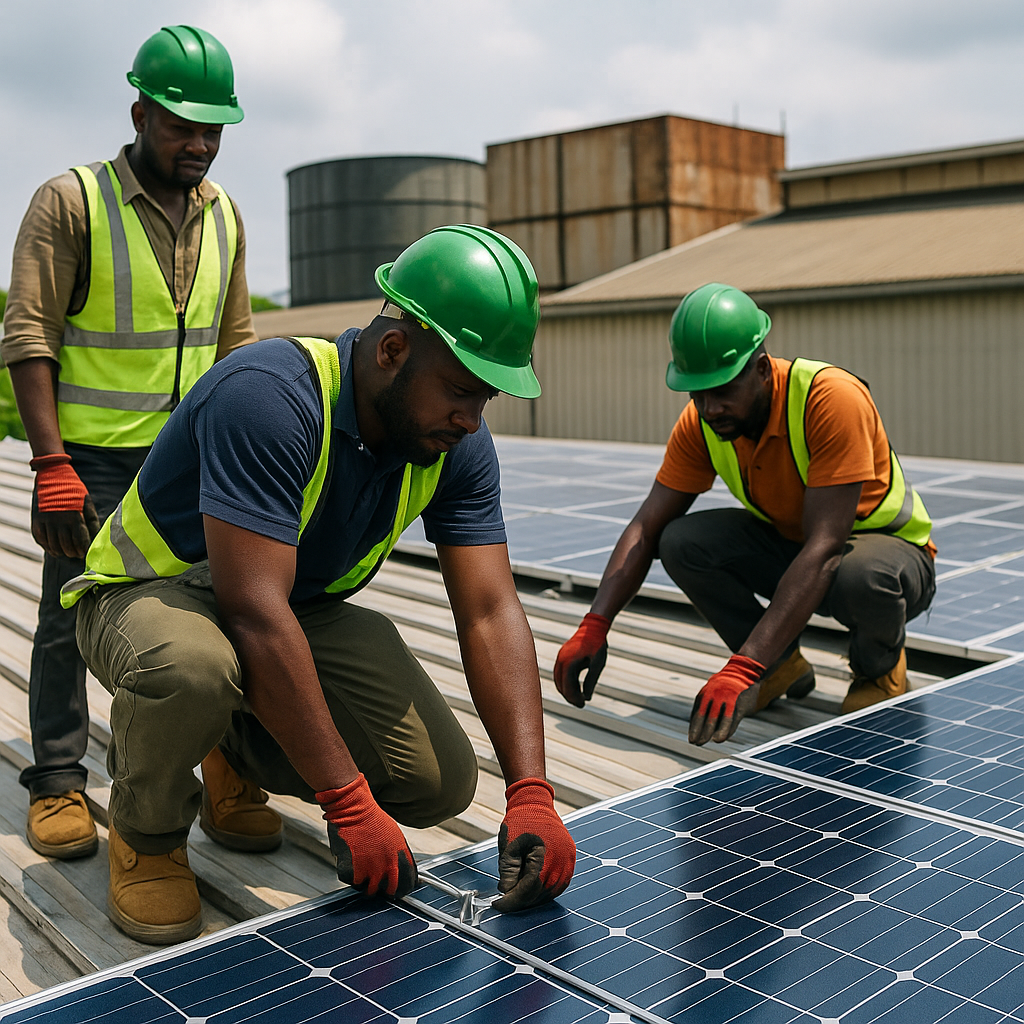
Solarzone engineers design full turnkey factory systems.
⭐ 12️⃣ Which Factories Benefit Most From Solar?
Solar works excellently for:
✔ Furniture factories
✔ Water packaging factories
✔ Food processing
✔ Plastic & nylon manufacturing
✔ Cold rooms
✔ Beverage & bottle factories
✔ Printing presses
✔ Textile & fashion factories
✔ Chemical plants
✔ Pharmaceutical production
If your factory uses high daytime energy, solar will cut your costs drastically.
⭐ Why Choose Solarzone for Industrial Solar Installation?
Solarzone is trusted by businesses across Nigeria because we offer:
⭐ Professional energy audits
⭐ Full engineering design
⭐ Large solar installation experience
⭐ Lithium battery integration
⭐ Generator-solar hybrid configuration
⭐ Industrial wiring & safety
⭐ After-sales maintenance
⭐ Nationwide installation
⭐ Scalable megawatt systems
Our goal: Reduce your energy cost and increase your factory’s profit.
🏁 Final Thoughts
Solar is no longer an alternative — it is now the most cost-effective, reliable, and sustainable power solution for Nigerian factories.
With the right installation, factories can:
✔ Reduce diesel usage by 30–70%
✔ Cut PHCN bills
✔ Improve production uptime
✔ Protect equipment
✔ Increase overall profit
Let Solarzone Nigeria design a powerful industrial solar solution for your business.
💥 Call to Action
⚡ Want to reduce industrial energy costs in your factory?
Contact Solarzone Nigeria today for a commercial solar assessment.
📞 Call/WhatsApp: 09091394722